
Access todecent learning infrastructure and the long distances to the nearest schools
remain major challenges for children in Zambia’s rural communities. Quite often, the reality for these children is learning in grass-thatched classrooms without desks, where they sit on stones or bare wood during lessons.
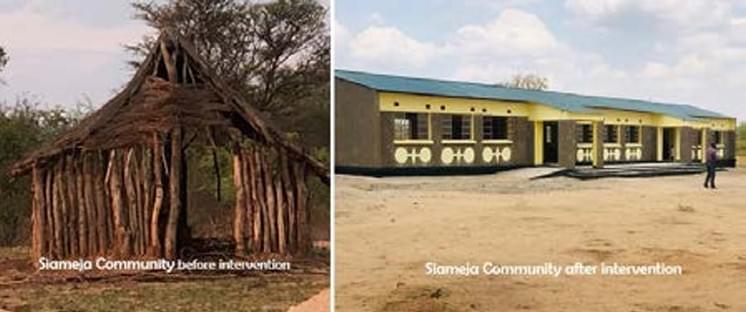
For many years,this was the situation at Siameja Community School, located in ZimbaDistrict of Southern Province, which serves 149 learners. Lessons wereconducted in a grass-thatched classroom, and learners had no proper furniture. This learning environment negatively affected learners’ concentration and contributed to poor academic performance.
Through the Rural Child Access to Education (R-CATE) Programme, implemented by ResponseNetwork in partnership with Norwegian Church Aid, the situation atSiameja Community School has significantly improved.
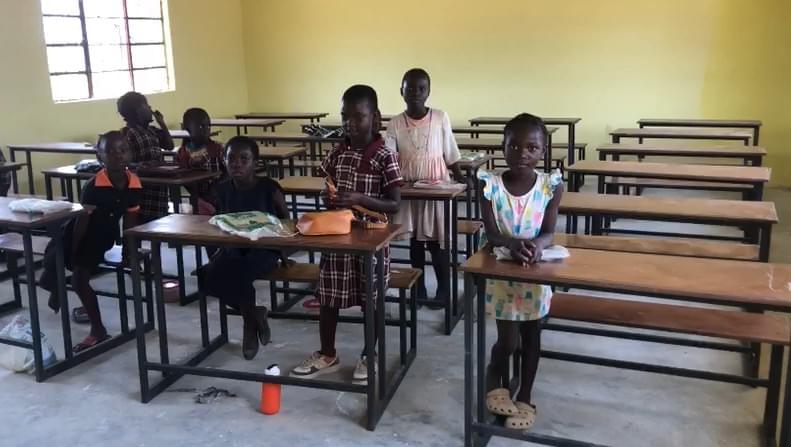
The school now boasts a standard 1 x 3 classroom block, with adequate desks forall learners. In addition, a teacher’s house, which is nearingcompletion, has been constructed to support staff retention. As a result, learners now have access to a safe and conducive learning environment comparable to that of children in urban areas.
Furthermore,the school has been provided with a 10,000-litre water point, which notonly serves the school but also supplies clean water to surrounding villages.
The HeadTeacher, Mr. Mbewe, expressed his gratitude to Response Network and itspartners for transforming the school:
“I amextremely excited and humbled by the work done by Response Network and its
partners here at Siameja Community School. We now have a standard learning space for our children and a decent teacher’s house. It is my hope that through this support, pupils—who are the future leaders—will be shaped for a better tomorrow,” he said.
Under theR-CATE Programme, two additional community schools—Muyunda CommunitySchool in Kazungula District and Namamba Community School—are alsonearing completion.